January 31, 2024
Contact: Rachel Tropp
rachel_tropp@gse.harvard.edu
617.998.8597
New Research Shows Rhode Island is Still Recovering from Significant Pandemic Learning Loss; Action Needed Before Federal Spending Deadline to Ensure Remaining Gaps are Closed
Higher income districts see greater improvement in math and reading than lower income districts.
Researchers urge state and district leaders to use remaining federal funding on adding instruction time through summer school and tutoring
(January 31, 2024) After reporting on pandemic achievement losses last year, the Education Recovery Scorecard (a collaboration between the Center for Education Policy Research at Harvard University and The Educational Opportunity Project at Stanford University) is issuing a report on the first year of academic recovery for school districts in 30 states.
Last year, students in many states made historic gains in math and reading. Still, they made up only one-third of the pandemic loss in math and one quarter of the loss in reading. Even if they maintain last year’s pace, students will not be caught up by the time federal relief expires in September. Moreover, the recovery efforts are not closing the gaps between high- and low-poverty districts which widened during the pandemic.
Rhode Island:
“No one wants to see poor kids footing the bill for the pandemic, but that is the path Rhode Island is on,” said Dr. Thomas Kane, Faculty Director of the Center for Education Policy Research at Harvard University and one of the study’s co-authors. “With federal relief dollars drying up, state leaders must ensure the remaining dollars are used for Summer 2024 and for tutoring and after-school next year.”
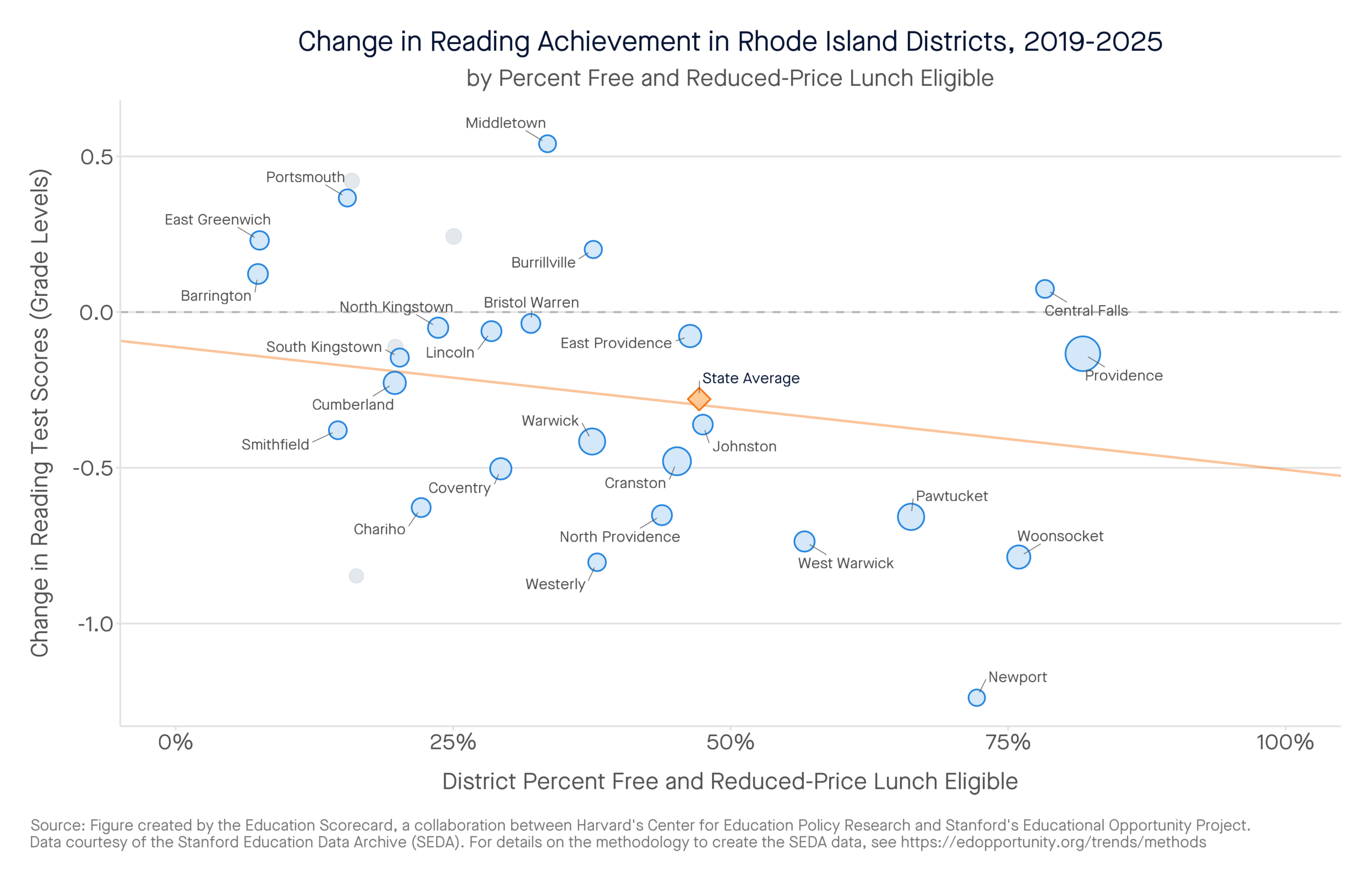
- Between 2019 and 2022, achievement fell by 49% of a grade equivalent in math and 23% in reading. These figures are similar to the average national losses.
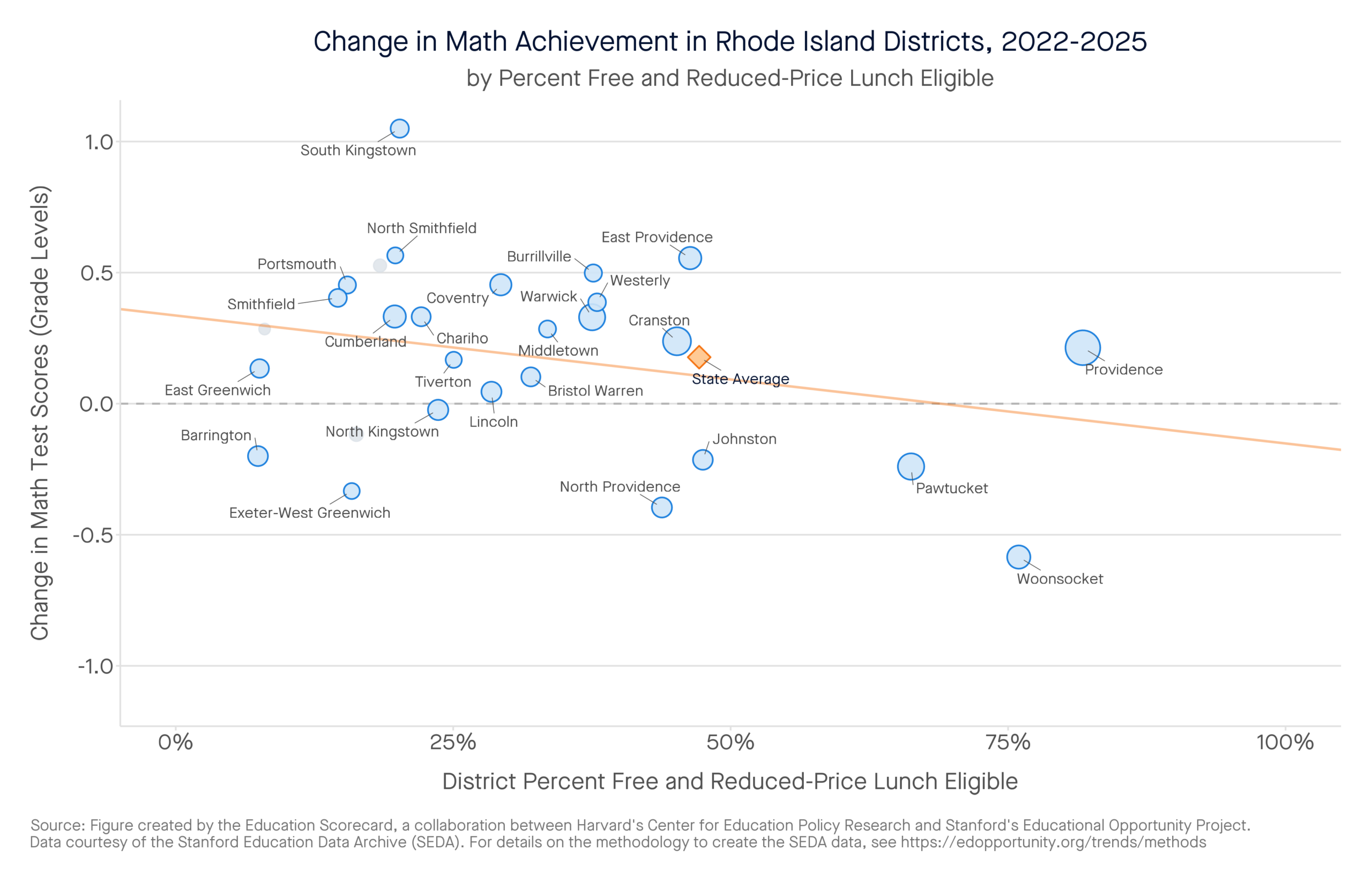
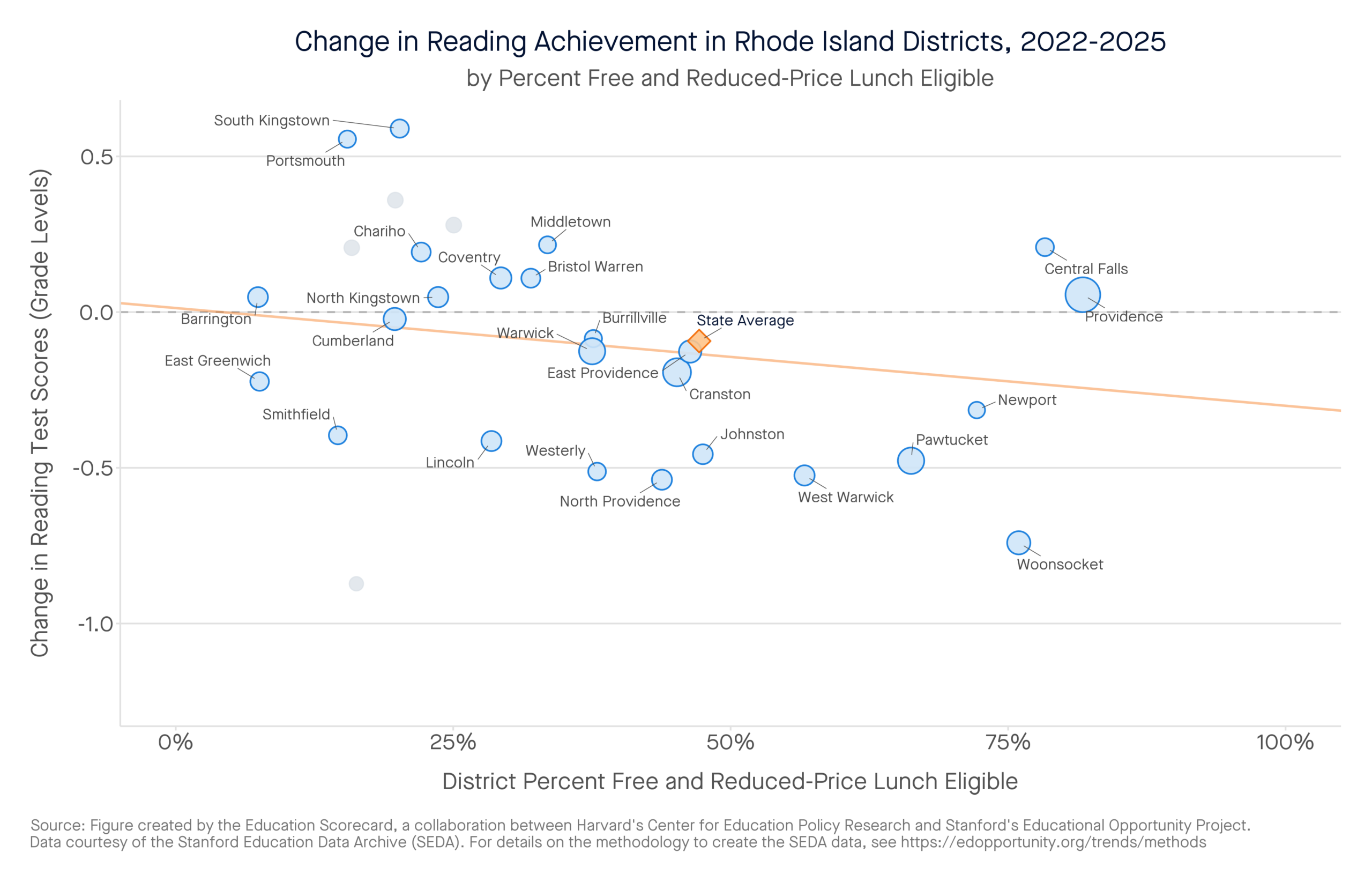
- Between 2022 and 2023, math achievement in Rhode Island improved by 19% of a grade equivalent in math and 10% of a grade equivalent in reading.
- Unfortunately, that recovery was greater in the higher income districts, such as South Kingstown and East Greenwich, where achievement grew by over a third of a grade equivalent. As of 2023, many districts such as Newport, West Warwick, Woonsocket, Pawtucket, Providence and North Providence remained half a grade equivalent or more behind.
- Rhode Island received over $646 million in federal recovery funding and as of January 2024, still had over $216 million (34%) remaining.
National Takeaways:
Over the course of the 2022-2023 school year, students in one state (Alabama) returned to pre-pandemic achievement levels in math. Despite progress, students in seventeen states remain more than a third of a grade level behind 2019 levels in math: AR, CA, CT, IN, KS, KY, MA, MI, NC, NH, NJ, NV, OK, OR, VA, WA, and WV.
Students in three states (Illinois, Louisiana, and Mississippi) returned to 2019 achievement levels in reading, while students in 14 states remain more than a third of a grade level behind in reading: CT, IN, KS, MA, MI, NC, NV, OK, OR, PA, VA, WA, SD, and WY.
Kane said, “Many schools made strong gains last year, but most districts are still working hard just to reach pre-pandemic achievement levels.”
As the project reported last year, achievement gaps between high- and low-poverty districts widened sharply during the pandemic, with students in high-poverty districts losing the most ground. The new data reveal that recovery efforts have thus far failed to close those gaps.
On the contrary, in many states, the recovery is being led by the wealthier districts which lost the least during the pandemic. The states in which the gaps between the wealthiest and poorest districts widened the most include Massachusetts, Ohio, and Connecticut.
The new data also highlight communities that have made substantial progress toward academic recovery, such as Birmingham, Alabama, and Nashville/Davidson, Tennessee.
Congress provided a total of $190 billion in federal aid to K-12 schools during the pandemic, with most of it targeted at high-poverty districts. As of January 2024, $51 billion of that aid is still available, with the remaining dollars due to be obligated by September of this year (or returned to the federal government). To the extent that states and districts have remaining funds, they should focus those dollars on academic recovery this summer and next school year.
The researchers urge education leaders to take the following steps as the federal spending deadline approaches:
- This spring, schools should inform parents if their child is below grade level in math or English so that parents have time to enroll in summer learning. Parents cannot advocate if they are misinformed. Research shows that parents take specific actions when they know their child is behind grade level.
- Schools should expand summer learning seats this summer. States should require districts to set aside sufficient funds to accept all students who sign up. Research has shown that six weeks of summer learning produces a fourth of a year of learning, especially in math.
- Districts can extend the recovery efforts into the next school year by contracting for high-quality tutoring and after-school programs before September. Although the federal relief dollars cannot be used to pay school employee salaries after September, they can be used to make payments on contracts that are signed before the deadline. (Click here to see the U.S. Department of Education’s recent guidance on seeking an extension. For ideas on how to tie contractor payments to student outcomes, see the Outcomes-Based Contracting project at the Southern Education Foundation.)
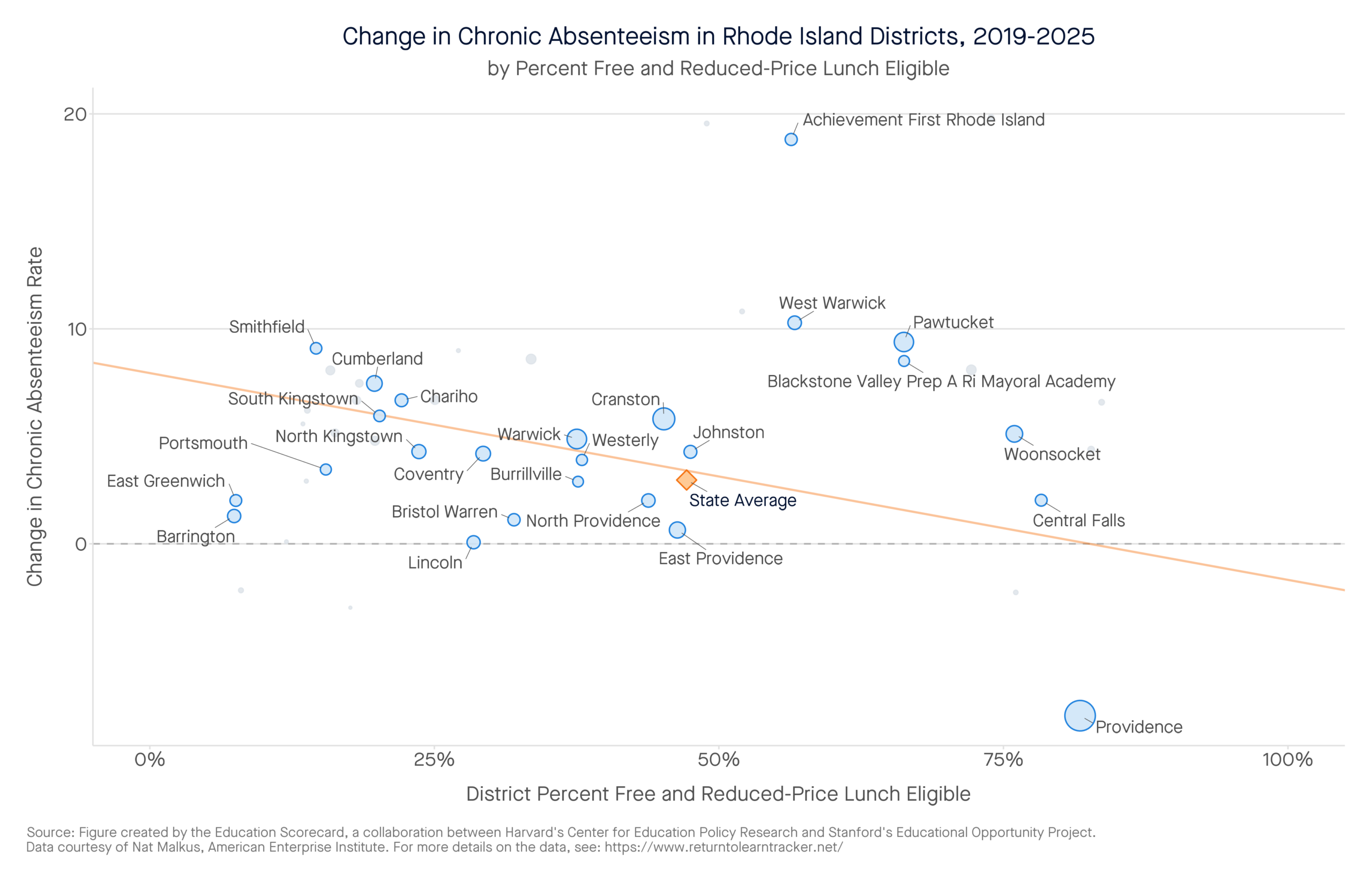
- Local government, employers and community leaders should get involved in helping schools lower student absenteeism, which has remained high since the pandemic.
In addition to encouraging districts to reserve federal dollars to pay for Summer 2024 programming, tutoring, absentee reduction, and after-school programs for the 2024-2025 academic year, the researchers encourage states to consider using state dollars to incentivize districts to extend the school year or to expand summer learning in future years, as Texas has done.
The Education Recovery Scorecard receives philanthropic support from Citadel founder and CEO Ken Griffin and Griffin Catalyst, Bloomberg Philanthropies, and Carnegie Corporation of New York.
About the Center for Education Policy Research at Harvard University
The Center for Education Policy Research at Harvard University, based at the Harvard Graduate School of Education, seeks to transform education through quality research and evidence. CEPR and its partners believe all students will learn and thrive when education leaders make decisions using facts and findings, rather than untested assumptions. Learn more at cepr.harvard.edu.
Contact: Rachel Tropp at rachel_tropp@gse.harvard.edu, 617.998.8597